It is the question every curious drinker asks, usually with a note of scepticism: is Moroccan wine actually any good? The honest answer is yes, with caveats worth understanding. Morocco makes some genuinely accomplished wine, a great deal of unremarkable wine, and very little that reaches the outside world. This guide lays out the evidence on both sides.
The short answer
Morocco is the most significant wine producer in North Africa and among the most respected in the Arab world. Its best bottles are well made, distinctive and worth seeking out. It is not, however, a country producing wines that compete at the very top of the global market, and anyone approaching it expecting a hidden Burgundy will be disappointed. Judged as what it is, a warm-climate Mediterranean producer making Rhône-inflected reds and pale dry rosé, it performs well.
The numbers behind the reputation
Scale explains a lot about why Moroccan wine is unfamiliar. The country produces roughly 40 million bottles a year, which sounds substantial until you set it against world output: around 30,500 tonnes in 2023, roughly 0.1 percent of global production, ranking somewhere in the mid-thirties among wine-producing nations.
Exports are smaller still. Morocco shipped in the region of 380 tonnes of wine in 2024, worth a little over two million US dollars, placing it around sixtieth among exporting countries, and the figure fell more than twenty percent year on year. Something like one to two percent of what Morocco makes leaves the country. Almost everything is drunk domestically, largely by tourists and by Morocco’s own drinkers.
The industry is also unusually concentrated. Les Celliers de Meknès, founded in 1964 by Brahim Zniber, is commonly estimated to account for around 85 percent of national production. A single company therefore shapes most of what the world tastes as Moroccan wine.
The case for: why it is better than you expect
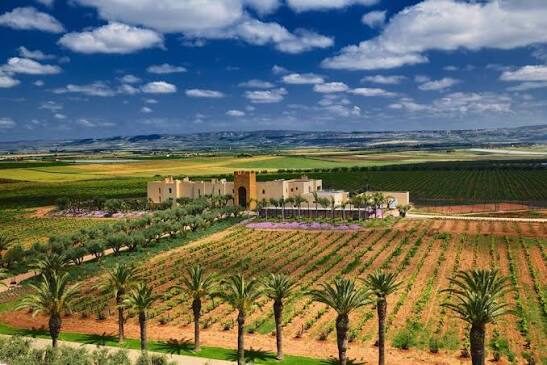
Altitude does the heavy lifting. The Meknès plateau and the Middle Atlas foothills sit high enough that nights turn genuinely cold even after hot days. That diurnal swing preserves acidity and aromatic detail, which is precisely what warm-climate wine usually lacks. It is the single most important quality factor in Moroccan wine.
The Atlantic moderates the coast. Vineyards from Rabat down to El Jadida, and around Essaouira, get maritime cooling that keeps whites and vin gris fresh.
The grapes suit the place. Morocco plants Rhône and Mediterranean varieties, Syrah, Grenache, Cinsault, Carignan, Mourvèdre, alongside Bordeaux varieties. These are heat-adapted grapes doing what they do well, not cool-climate varieties struggling. The guide to French and Mediterranean varietals covers the plantings in detail.
Serious outside investment arrived. After independence in 1956 much of the vineyard was abandoned or grubbed up, and the industry nearly disappeared. From the 1990s, French capital and expertise returned. Domaine de la Zouina was founded by two Bordeaux chateau proprietors; Domaine des Ouled Thaleb partnered with the late Rhône vigneron Alain Graillot. That expertise is visible in the glass.
The evidence: what critics actually say
International critical coverage of Moroccan wine is thin, which is itself part of the answer. Where it exists, it clusters around a small number of bottles.
The Syrocco and Tandem Syrahs from Thalvin and Alain Graillot have drawn the most attention, including a Decanter review and coverage from respected wine writers. The consistent descriptors are peppery black fruit, liquorice, dried herbs and warm spice, with reviewers noting a recognisable Graillot signature applied to unfamiliar terroir. Not every verdict is glowing; at least one reviewer has argued the wine trades partly on the novelty of its origin.
Château Roslane carries institutional weight rather than critical acclaim: it is the only estate labelling under Coteaux de l’Atlas premier cru, Morocco’s first and best-known AOC, established in 1998. Volubilia from Domaine de la Zouina is widely stocked by discerning independent merchants, which is its own kind of endorsement.
The case against: an honest counterweight
Most of it is ordinary. The overwhelming majority of Moroccan production is inexpensive everyday wine made at volume. That is true of most countries, but with so little exported, the ratio of excellent to ordinary matters more to a visitor’s impression.
Concentration limits diversity. When one producer makes most of the wine, stylistic range narrows. The independent, small-grower culture that drives quality competition elsewhere is only beginning to develop here.
The evidence base is thin. Few Moroccan wines are systematically reviewed or scored by major critics, and the country rarely features in international competitions. Anyone claiming confident quality rankings across Moroccan wine is working from a small sample.
Heat is a real constraint. Altitude helps, but Morocco is hot, and in warmer vintages wines can tip toward high alcohol and soft acidity.
Domestic wine culture is limited. In a country where most people do not drink, there is less of the internal critical pressure that pushes quality upward.
What to expect at each price
Budget, and mostly sold in Morocco. Guerrouane and Boulaouane gris and reds: simple, clean, refreshing served cold. Perfectly good holiday drinking, nothing more.
Around fifteen to twenty-five pounds or dollars. Volubilia and comparable bottles. This is the sweet spot: properly made wine with real character that stands comparison with Languedoc or Roussillon at similar money.
Around twenty-five to forty. Syrocco, Tandem, Château Roslane Premier Cru. Ambitious, structured, oak-influenced. Competing here against strong Rhône and Bordeaux, and the judgement is closer.
How to judge for yourself
Try a vin gris and a Meknès Syrah side by side, both served at the right temperature, ideally with Moroccan food rather than on their own. Buy the most recent vintage available for the whites and gris. And set the comparison honestly: judge a twenty-pound Moroccan red against other twenty-pound reds, not against a first growth. The guide to the best Moroccan wines to try lists specific bottles with prices and where to find them.
The verdict
Moroccan wine is better than its reputation and smaller than its ambition. The top bottles are genuinely good, the mid-range offers real value, and the whole category carries the interest of a place most drinkers have never tasted. What it lacks is scale, distribution and critical scrutiny, and those are the reasons it stays a discovery rather than a fixture.
Frequently asked questions
Is Moroccan wine good quality?
The best examples are. Altitude, Atlantic influence and well-matched Rhône varieties produce genuinely good wine, and French investment since the 1990s has raised standards. Most production, however, is inexpensive everyday wine.
How big is the Moroccan wine industry?
Around 40 million bottles a year, roughly 0.1 percent of world production, with exports of only a few hundred tonnes annually. Les Celliers de Meknès accounts for an estimated 85 percent of output.
What is the best Moroccan wine?
Château Roslane Premier Cru for prestige, and the Syrocco Syrah from Thalvin and Alain Graillot for critical standing and value.
Why have I never seen Moroccan wine?
Because it is barely exported. Only one to two percent of production leaves the country, so outside France, Belgium and specialist merchants it is genuinely rare.
See also on this site: History of Moroccan Wine, Moroccan Wine Regions Guide and Best Moroccan Wine Producers to Know.