Wine in Morocco is not a modern novelty or a colonial import that arrived and left. It is one of the oldest continuous threads in the country’s story, stretching back more than two millennia, surviving empires and religions and independence movements, nearly dying twice, and reinventing itself as something better than it had ever been. It is a genuinely good story, and most people have never heard it.
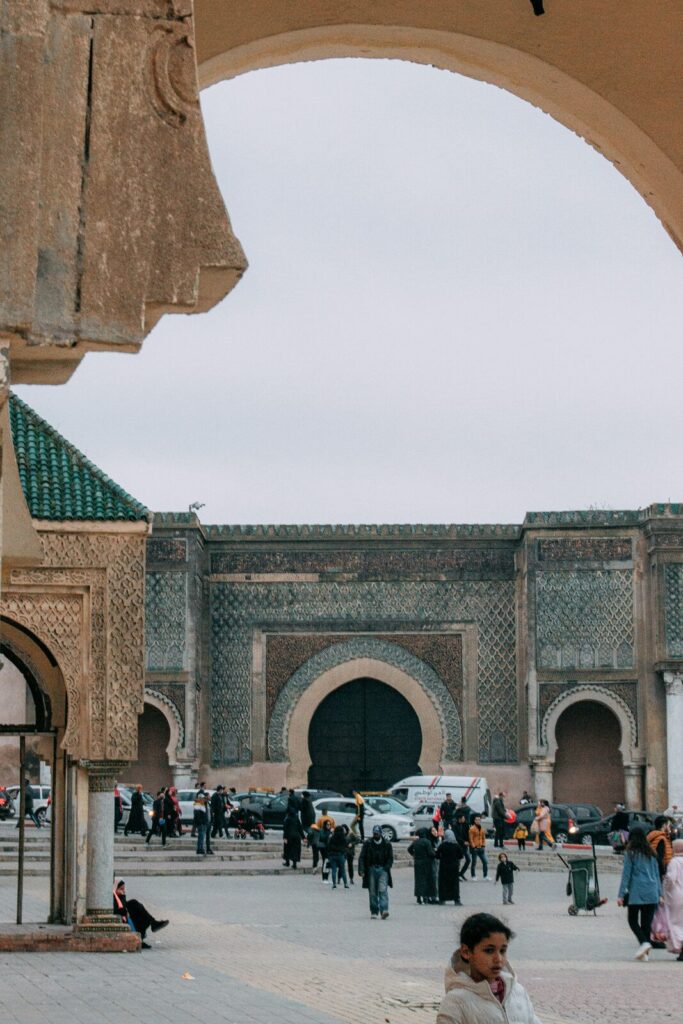
Phoenicians, Romans, and the vines of Volubilis
The first vines almost certainly came with Phoenician traders working the North African coast, but it was Rome that turned Moroccan winemaking into an industry. At Volubilis, the remarkably preserved Roman city near Meknès, you can still walk among the presses and storage vessels of a settlement that produced wine and olive oil for export across the empire. That the modern quality heartland sits in almost exactly the same place, on the same plateau near the same ruins, is one of those satisfying accidents of geography. The land was always good for this.
The long quiet centuries
With the spread of Islam from the seventh century onward, wine production receded from public life, though it never entirely vanished. Grapes were still grown, often as table fruit and raisins, and small-scale winemaking persisted in places. For a long stretch, Moroccan wine was a quiet, local, largely undocumented affair rather than an industry.
The French protectorate: the great planting
Everything changed in the early twentieth century. Under the French protectorate, established in 1912, French settlers planted vines on a massive scale, bringing the grapes and techniques of southern France. By the 1950s Morocco had tens of thousands of hectares under vine and was shipping large volumes of robust red wine to France, much of it used to beef up thinner French blends. This was the era that gave Morocco its grape varieties, its Cinsault-heavy plantings, and its French-modeled ambitions. It was big, and it was mostly about quantity.
Independence and the long decline
Independence in 1956 pulled the rug out. Many French growers and technicians left. France restricted imports of Moroccan wine to protect its own producers, and the main export market evaporated almost overnight. In a majority-Muslim country the domestic market was limited, vineyards were nationalized and neglected, and over the following decades the area under vine collapsed, falling to a fraction of its peak. For a while it looked as though Moroccan wine might simply fade out.
The 1990s revival: quality over quantity
The turnaround began in the 1990s, and it was deliberate. The Moroccan state entered into partnerships with major French wine companies, foreign investment returned, and, crucially, the whole mindset shifted. Instead of chasing bulk volume, the new generation replanted better sites at altitude, brought in improved clones and modern cellar technology, and built an appellation system modeled on France: two AOC zones (Coteaux de l’Atlas and Les Côtes de Rommani) at the top and fourteen AOG appellations below. Château Roslane’s award of the country’s first “Château” status in 2008 was a symbolic milestone in that shift from commodity to craft.
Morocco today
The result is a smaller but far more serious industry. Morocco now farms roughly 50,000 hectares of vines and makes around 40 million bottles a year, ranking near the top 40 producers worldwide and second in Africa. Estates like Domaine de la Zouina and Val d’Argan show what altitude and coast can do, big houses like Les Celliers de Meknès anchor the volume, and the country’s Syrah has started to earn real respect abroad. The challenges ahead are real, especially a warming, drying climate that threatens Mediterranean vineyards, but the trajectory of the last three decades has been up.
Read on
See where that history lives today in the wine regions guide, meet the producers carrying it forward, or find out whether Moroccan wine is any good now.